Why Indonesia Is a Strategic Sourcing Destination
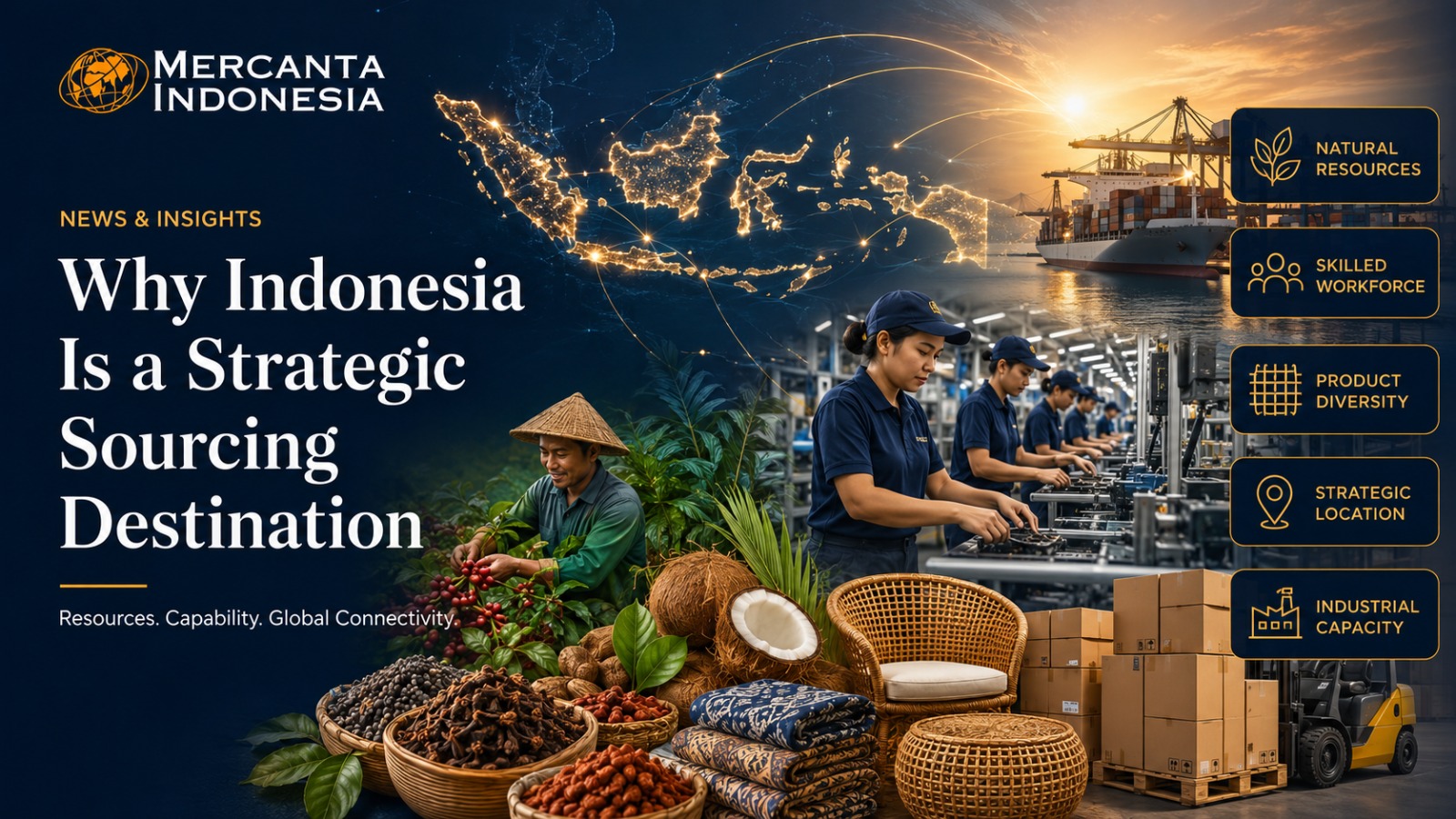
Discover why global buyers choose Indonesia as a strategic sourcing hub—from abundant natural resources and skilled labor to product diversity and value-added manufacturing.
Global buyers are no longer evaluating suppliers based only on price. They are also considering supply-chain resilience, product diversity, access to raw materials, manufacturing capability, delivery reliability, sustainability, and the ability to develop long-term partnerships.
Indonesia offers a distinctive combination of these advantages.
As a major economy positioned between the Indian and Pacific Oceans, Indonesia connects international buyers with abundant natural resources, a large workforce, established manufacturing sectors, traditional craftsmanship, and an exceptionally diverse product base.
From agricultural commodities and natural ingredients to furniture, apparel, food products, handicrafts, and industrial components, Indonesia provides sourcing opportunities for buyers across many industries.
1. Access to Diverse Natural Resources
Indonesia’s geography and tropical climate support a wide variety of agricultural, marine, forestry, and mineral resources.
Products available from Indonesia include:
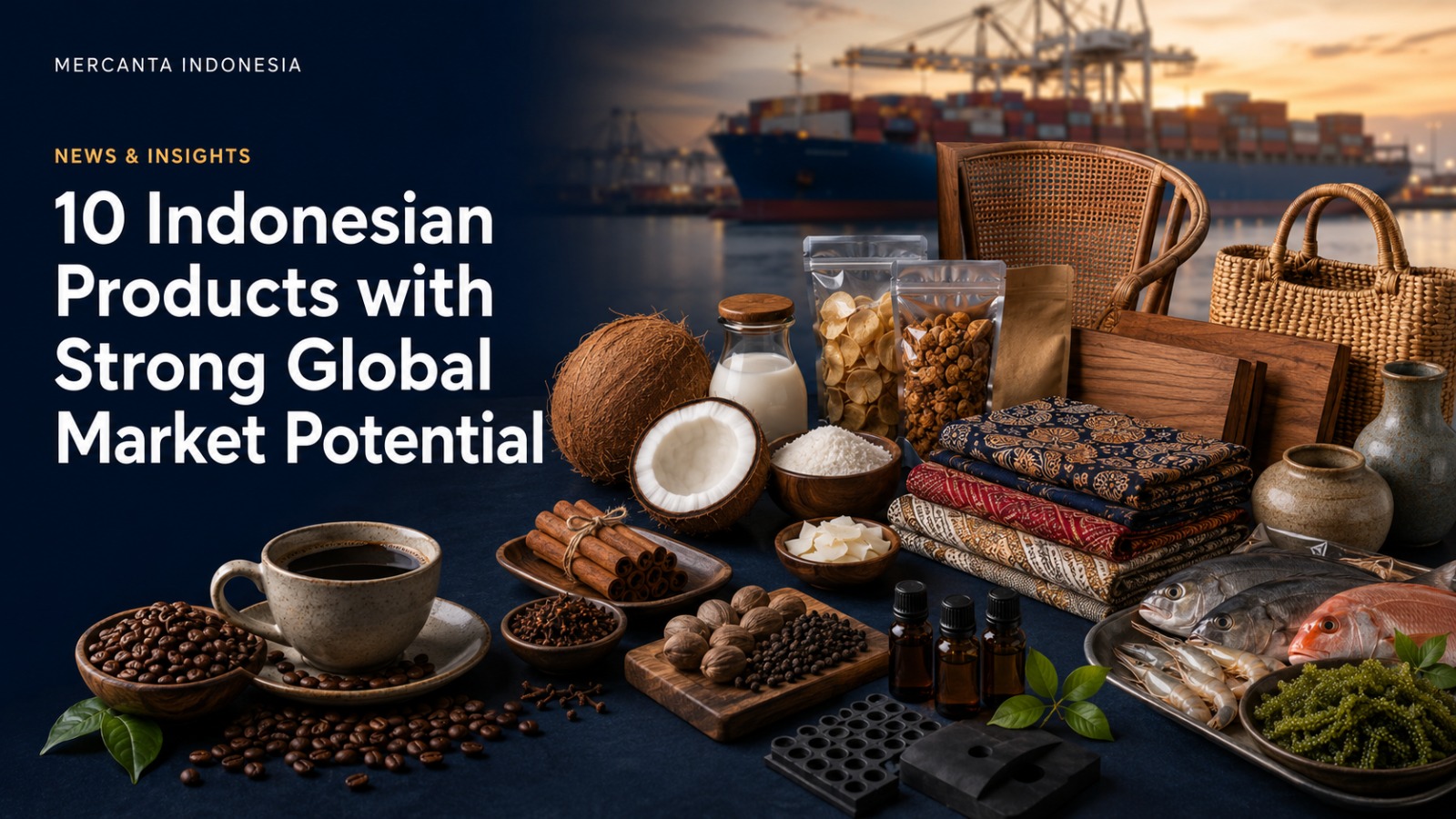
• Coffee • Cocoa • Spices • Coconut products • Tropical fruits • Natural rubber • Seaweed • Seafood • Essential oils • Natural fibers • Timber-based materials • Minerals and metals
This broad resource base allows buyers to source both raw materials and processed products from the same country.
For example, coconut can be transformed into:
• Coconut milk • Coconut cream • Virgin coconut oil • Coconut sugar • Desiccated coconut • Coconut flour • Coco fiber • Coco peat • Coconut-shell charcoal • Handicrafts
Coffee can be supplied as green beans, roasted coffee, ground coffee, specialty single-origin products, or private-label consumer products.
Indonesia’s sourcing strength therefore lies not only in resource availability but also in the potential to create value-added products.
The importance of traceability
Access to natural resources must be supported by responsible sourcing.
International buyers increasingly require information about:
• Geographic origin • Production methods • Environmental practices • Legal sourcing • Labor conditions • Chain of custody • Batch traceability • Sustainability certification
Indonesian suppliers that can provide transparent sourcing records and consistent raw-material standards will be better positioned to build long-term international partnerships.
2. A Large and Adaptable Workforce
Indonesia has a large workforce supporting agriculture, manufacturing, processing, logistics, technology, design, and traditional craft production.
Different regions have developed specialized skills and production ecosystems.
These may include:
• Furniture and woodcraft • Rattan products • Textiles and garments • Batik and traditional fabrics • Footwear • Food processing • Automotive components • Electronics • Metalworking • Ceramics • Jewelry • Handicrafts • Agricultural processing
This combination of industrial labor and traditional craftsmanship gives buyers access to both high-volume manufacturing and specialized production.
Flexibility for different order models
Depending on the product and supplier, Indonesian businesses may support:
• Standard catalog products • Customized designs • Private-label production • Original equipment manufacturing • Original design manufacturing • Small-batch artisan production • Large-volume industrial orders • Project-based procurement • Multi-supplier consolidation
Buyers must still match their order requirements with the appropriate supplier.
A small workshop may offer excellent customization and craftsmanship but have limited production capacity. A large factory may provide scale and consistent processes but require higher minimum order quantities.
The most suitable supplier is not necessarily the largest or least expensive. It is the supplier whose capabilities match the buyer’s quality, volume, delivery, and commercial requirements.
3. Exceptional Product Diversity
Indonesia’s product diversity is one of its greatest sourcing advantages.
International buyers can explore opportunities across several major categories.
Food and agricultural products
• Coffee and cocoa • Spices and seasonings • Coconut products • Processed food • Snacks • Sauces and condiments • Tropical fruit products • Herbal drinks • Tea • Food ingredients
Marine products
• Shrimp • Tuna • Crab • Squid • Frozen fish • Canned seafood • Seaweed • Processed marine products
Furniture and home products
• Teak furniture • Rattan furniture • Indoor and outdoor furniture • Decorative lighting • Home accessories • Baskets • Ceramics • Tableware • Hospitality furniture
Fashion and textiles
• Apparel • Footwear • Sportswear • Modest fashion • Uniforms • Home textiles • Batik • Woven fabrics • Fashion accessories
Natural and personal-care ingredients
• Essential oils • Botanical extracts • Coconut oil • Herbal ingredients • Natural fragrances • Plant-based materials
Industrial products
• Rubber components • Automotive parts • Electrical products • Metal products • Building materials • Packaging • Machinery components • Processed minerals
This product range allows buyers to develop multiple sourcing programs within Indonesia rather than relying on a single category.
4. Strategic Location in Global Trade
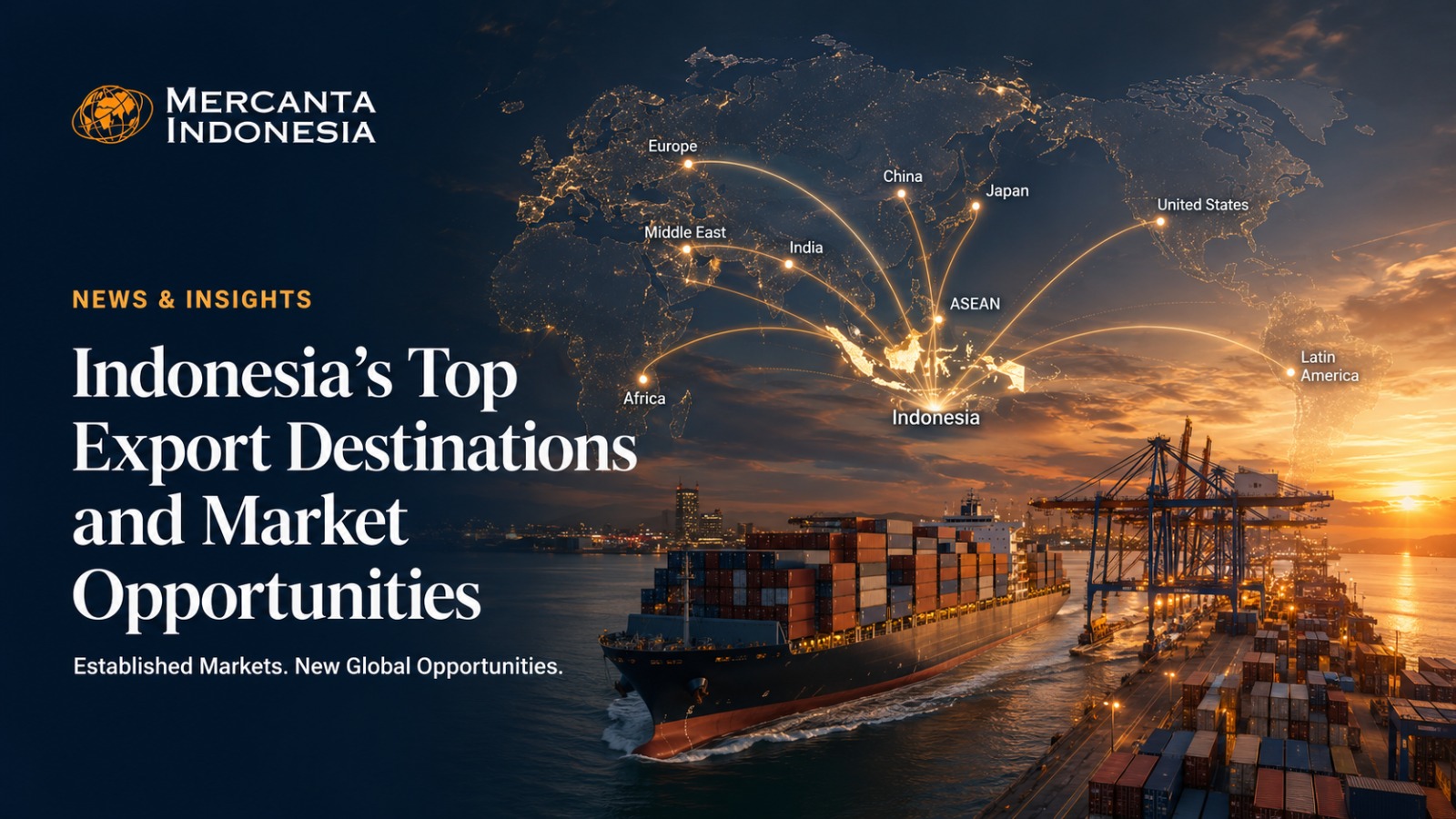
Indonesia is located between major international shipping routes connecting East Asia, Southeast Asia, South Asia, the Middle East, Australia, Europe, and the Americas.
Its location provides access to:
• ASEAN markets • China • Japan • South Korea • India • Australia and New Zealand • Middle Eastern markets • Global shipping networks
Indonesia’s proximity to other major Asian economies makes it particularly relevant for regional sourcing and supply-chain diversification.
Major ports and logistics centers support the movement of containerized goods, bulk commodities, manufactured products, and air cargo.
Logistics require location-specific planning
Indonesia is a large archipelagic country. Logistics conditions differ between regions, islands, products, and ports.
Buyers should evaluate:
• Distance from the production facility to the port • Inland transportation costs • Port availability • Shipping frequency • Container availability • Consolidation options • Transit time • Seasonal weather • Storage requirements • Cold-chain capability • Destination-port charges
A product with an attractive factory price may become less competitive if inland and international logistics are not calculated correctly.
For this reason, buyers should compare the total landed cost rather than focusing only on the supplier’s unit price.
5. Established Industrial Capacity
Indonesia has developed manufacturing capabilities across a wide range of industries.
Key areas include:
• Food and beverage processing • Textiles and apparel • Footwear • Furniture • Automotive manufacturing • Electronics • Chemicals • Rubber products • Metal processing • Paper and packaging • Construction materials • Consumer goods
This industrial base provides opportunities to source finished products, components, ingredients, and intermediate materials.
Many Indonesian manufacturers can support international requirements involving:
• Product development • Customized specifications • Private labeling • Export packaging • Quality testing • Technical documentation • Production scheduling • Container loading • International shipping documents
Capabilities vary substantially between suppliers. Buyers should therefore verify actual capacity, machinery, workforce, quality systems, certifications, and export experience before placing an order.
6. Opportunities for Value-Added Sourcing
Indonesia is increasingly relevant not only as a source of raw commodities but also as a producer of processed and manufactured goods.
Value-added sourcing can include:
• Roasted and packaged coffee rather than only green beans • Coconut food products rather than only raw coconut • Essential oils rather than unprocessed botanical materials • Finished furniture rather than raw timber • Packaged food rather than agricultural ingredients • Manufactured metal components rather than unprocessed minerals • Branded or private-label apparel rather than fabric alone
Value-added products can offer buyers:
• Greater product differentiation • Improved consumer convenience • More efficient procurement • Private-label opportunities • Stronger brand storytelling • Potentially higher retail margins • Reduced need for additional processing
However, value-added products often require more extensive certification, testing, packaging development, and regulatory preparation.
7. Strong Potential for Private-Label Production
International retailers, distributors, hospitality groups, and consumer brands may find opportunities to develop private-label products with Indonesian manufacturers.
Potential private-label categories include:
• Coffee • Tea • Snacks • Sauces • Coconut products • Personal-care products • Home accessories • Furniture • Apparel • Footwear • Handicrafts • Household products
A private-label project may involve:
• Product formulation • Packaging design • Label development • Color or material selection • Brand application • Sample approval • Regulatory review • Production planning • Quality inspection
Buyers should establish clear agreements regarding intellectual property, artwork ownership, molds, packaging inventory, minimum order quantities, confidentiality, and exclusivity.
8. Traditional Craftsmanship with Commercial Potential
Indonesia’s cultural diversity has created strong traditions in weaving, woodcarving, ceramics, metalwork, jewelry, basketry, furniture, and textile production.
These capabilities create sourcing opportunities for buyers seeking products with:
• Handmade characteristics • Natural materials • Cultural identity • Distinctive designs • Small-batch production • Artisan stories • Sustainable positioning
Potential markets include:
• Home décor retailers • Interior designers • Hotels and resorts • Gift stores • Lifestyle brands • Fashion businesses • Online marketplaces • Ethical and sustainable retailers
Traditional products may need adaptation for international dimensions, packaging, safety requirements, functionality, and consumer preferences.
The objective should be to improve market suitability without removing the product’s Indonesian identity.
9. Access to ASEAN and Regional Supply Chains
Indonesia is part of the wider Southeast Asian production and trade ecosystem.
For international companies, sourcing from Indonesia can support:
• Regional product distribution • Supply-chain diversification • Multi-country production strategies • Access to ASEAN consumer markets • Consolidation with other Asian suppliers • Development of regional supplier networks
Trade agreements may provide preferential access for qualifying products, but tariff benefits are not automatic.
Products must comply with:
• Rules of origin • HS-code requirements • Certificate-of-Origin procedures • Direct-shipment conditions • Product-specific regulations
Buyers and suppliers should confirm eligibility before calculating potential tariff savings.
10. Competitive Sourcing Beyond Price
Indonesia can offer commercially attractive sourcing opportunities, but buyers should evaluate the complete value proposition.
The lowest quoted price may not produce the lowest total cost.
A professional evaluation should consider:
• Product quality • Minimum order quantity • Production lead time • Packaging • Customization • Defect rates • Inspection costs • Inland transportation • International freight • Customs duties and taxes • Inventory requirements • Communication performance • Supplier reliability
A slightly higher unit price may represent better value when it includes stronger quality control, reliable delivery, better packaging, clearer documentation, and lower operational risk.
Challenges Buyers Should Understand
Indonesia offers significant potential, but sourcing must be managed carefully.
Possible challenges include:
• Differences in supplier capabilities • Inconsistent documentation • Variable quality-control systems • Long inland transportation routes • Limited English capability at some facilities • Seasonal raw-material availability • Regulatory complexity • Certification gaps • Uncontrolled subcontracting • Differences in business practices • Delays in samples or production • Unclear Incoterm cost allocation
These challenges do not make Indonesia unsuitable for sourcing. They demonstrate the importance of supplier selection, verification, clear specifications, inspections, and local coordination.
How to Source Successfully from Indonesia
1. Define the requirement clearly
Prepare information covering:
• Product specifications • Materials • Quantity • Packaging • Certifications • Target price • Delivery schedule • Destination • Incoterm • Sample requirements
2. Identify the right supplier type
Determine whether the project requires:
• A manufacturer • An artisan workshop • A processor • A cooperative • A trading company • An exporter • An aggregator • A sourcing partner
3. Verify the supplier
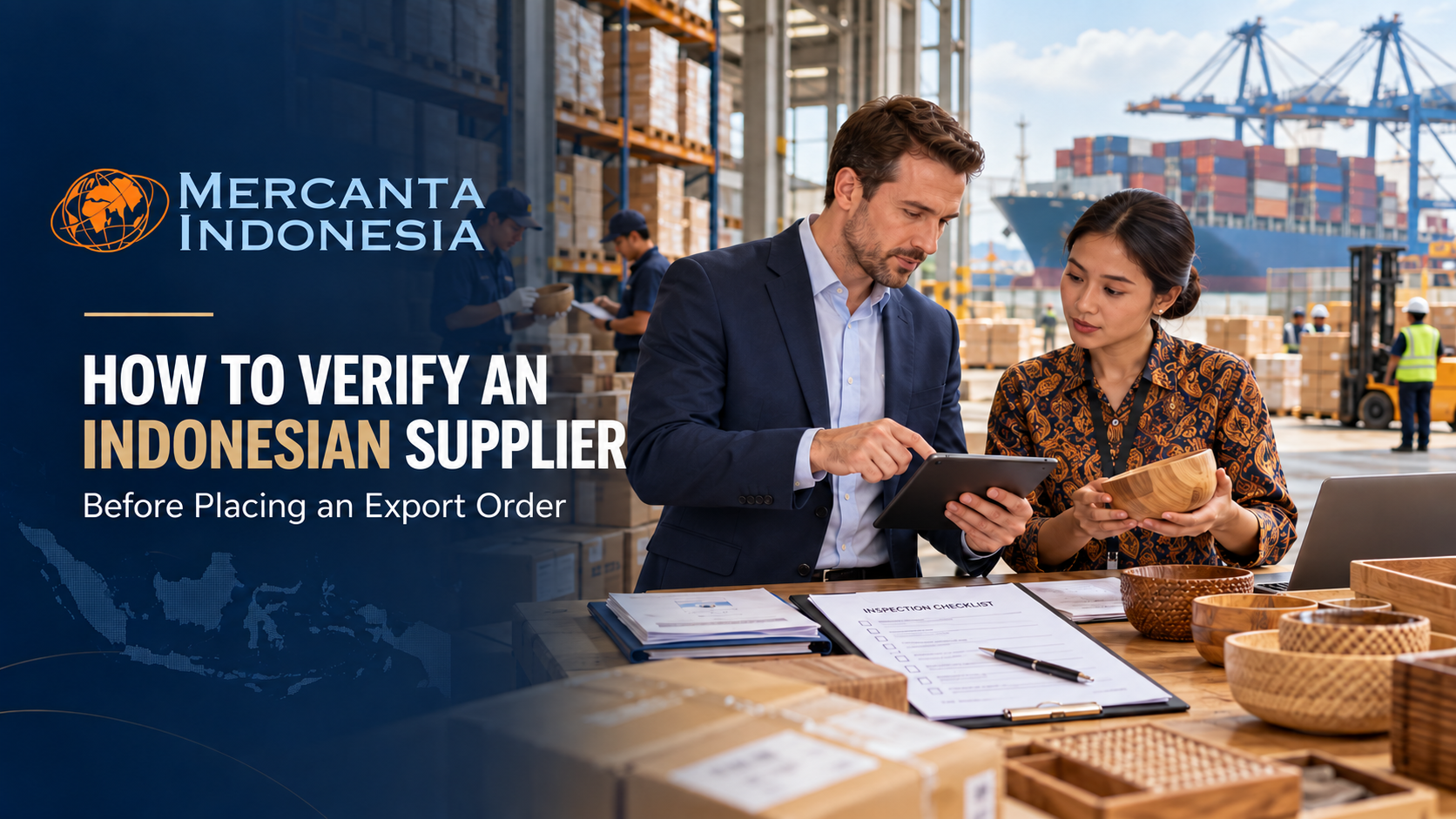
Review legal identity, facility, capacity, certifications, quality systems, track record, and bank-account information.
4. Approve samples and specifications
Do not rely on photographs alone. Establish measurable specifications and approve representative samples.
5. Confirm commercial terms
Document price, currency, payment, Incoterm, production schedule, inspection, packaging, claims, and shipping requirements.
6. Monitor production
For larger or customized orders, consider production updates, inspections, laboratory testing, and loading supervision.
7. Review documents before shipment
Confirm that the invoice, packing list, transport document, Certificate of Origin, and supporting certificates are accurate and consistent.
8. Begin with a controlled order
A trial order allows both parties to evaluate quality, communication, documentation, logistics, and delivery performance.
Building Long-Term Supplier Partnerships
The greatest value from sourcing in Indonesia may come from long-term collaboration rather than one-time transactions.
A strong supplier relationship can support:
• Better production planning • Product development • Improved pricing • Customized packaging • Priority capacity • Faster problem resolution • Joint quality improvements • Market-specific product adaptation • Greater supply-chain stability
Buyers should treat capable suppliers as strategic partners while maintaining appropriate contracts, performance controls, and verification procedures.
Suppliers should also receive clear forecasts, timely approvals, professional feedback, and payments according to the agreement.
Why Work with a Local Sourcing Partner?
Indonesia’s geographic scale, product diversity, and varied supplier structures can make sourcing difficult to manage remotely.
A local sourcing partner can help:
• Clarify buyer requirements • Identify potential suppliers • Coordinate supplier communication • Protect confidential business information • Arrange samples • Review product information • Coordinate site visits • Support inspections • Facilitate commercial discussions • Coordinate export documents • Communicate with logistics providers • Monitor important transaction stages
A sourcing partner does not replace the buyer’s legal, technical, financial, or regulatory due diligence. It provides local coordination and practical support throughout the sourcing process.
How Mercanta Indonesia Can Help
Mercanta Indonesia connects international buyers with Indonesian products and potential supply partners through a structured sourcing and trade-facilitation process.
Depending on the agreed scope, we can support:
• Product sourcing • Supplier identification • Supplier-information coordination • Sample development • Commercial quotations • Quality and inspection coordination • Private-label discussions • Export-document preparation • Freight communication • Buyer–supplier coordination • Confidential supplier introductions • Long-term procurement development
Indonesia’s combination of natural resources, workforce capabilities, product diversity, strategic location, and industrial capacity makes it an important sourcing destination for global businesses.
With careful supplier selection, clear requirements, professional verification, and disciplined execution, buyers can develop reliable and sustainable supply relationships in Indonesia.
Looking to source products from Indonesia? Contact Mercanta Indonesia to begin a structured sourcing and procurement discussion.
Disclaimer: This article provides general information and does not constitute legal, financial, customs, regulatory, certification, or professional due-diligence advice. Sourcing requirements should be evaluated according to the product, supplier, order value, destination, and risks of each transaction.