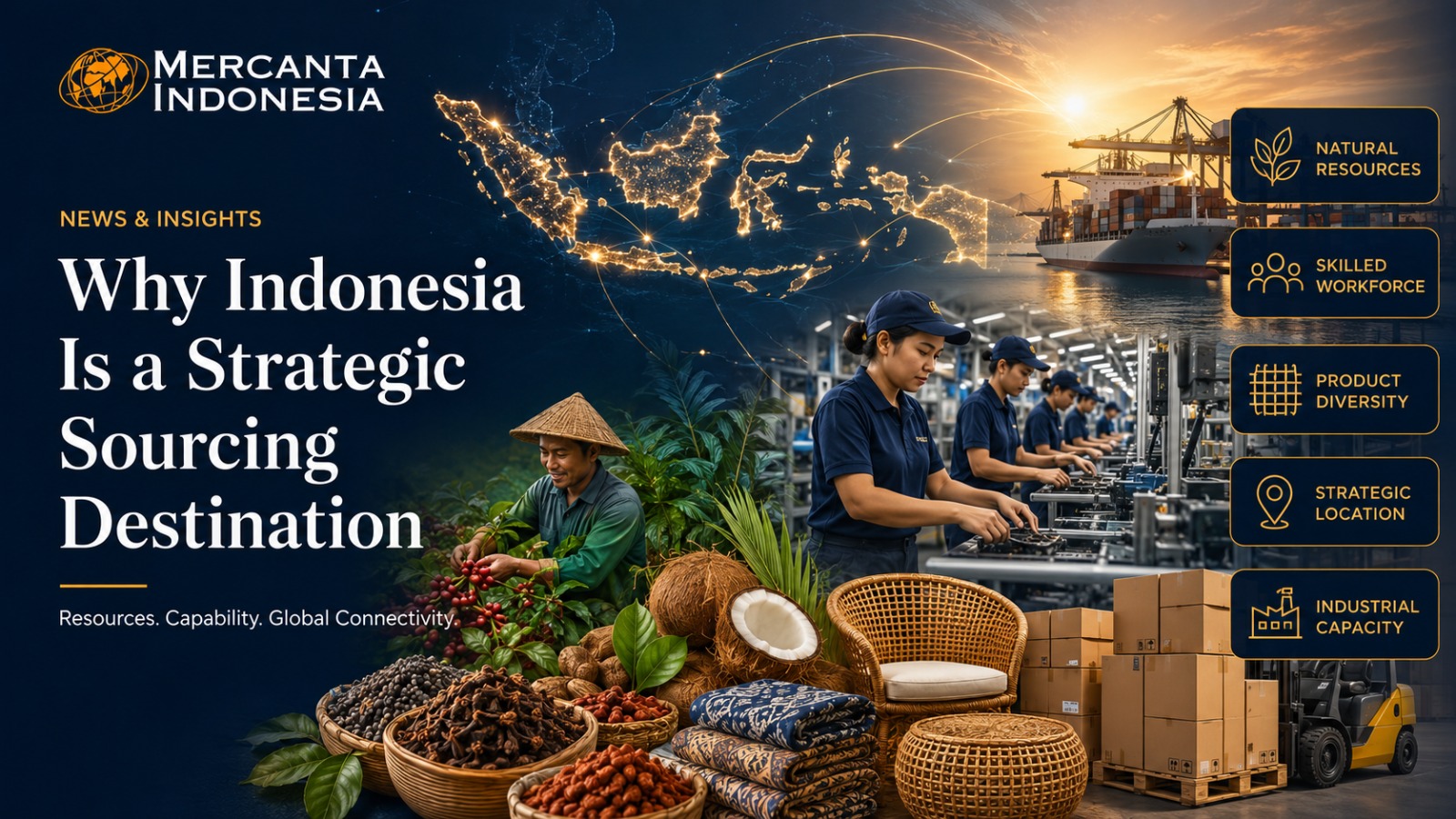
10 Indonesian Products with Strong Global Market Potential

Discover 10 top Indonesian product categories with high export potential—from specialty coffee and spices to furniture and eco-friendly natural resources.
Indonesia is one of the world’s most diverse production and sourcing destinations. Its abundant natural resources, agricultural heritage, skilled workforce, and growing manufacturing capabilities create significant opportunities for international trade.
From specialty coffee and tropical ingredients to furniture, textiles, and handmade products, Indonesia offers a broad range of goods for importers, distributors, retailers, hospitality companies, and private-label brands.
Here are ten Indonesian product categories with strong potential in the global market.
1. Indonesian Coffee
Indonesia is internationally recognized for its distinctive coffee-growing regions, each offering different flavor profiles, processing methods, and market positioning.
Popular Indonesian coffee origins include:
• Sumatra • Java • Bali • Sulawesi • Flores • Papua • Aceh Gayo • Toraja
Indonesian suppliers can offer green coffee beans, roasted coffee, ground coffee, single-origin products, specialty-grade selections, and private-label packaging.
The strongest opportunities are not limited to bulk commodities. International demand continues to develop for traceable, sustainably produced, specialty, organic, and uniquely processed coffee.
Exporters should provide consistent information about origin, variety, processing method, harvest period, moisture level, quality grade, certifications, and production capacity.
2. Spices and Seasonings
Indonesia has been connected to the international spice trade for centuries. Its tropical environment supports the cultivation of valuable spices and aromatic ingredients used by food manufacturers, restaurants, retailers, and health-oriented brands.
Products with export potential include:
• Nutmeg • Cloves • Cinnamon • Black and white pepper • Vanilla • Ginger • Turmeric • Cardamom • Galangal • Coriander
These products may be exported whole, dried, ground, blended, or processed into extracts and essential oils.
Global buyers increasingly consider food safety, cleanliness, traceability, moisture levels, pesticide controls, and microbiological standards. Indonesian suppliers can improve their competitiveness by investing in standardized processing, laboratory testing, reliable packaging, and transparent sourcing.
3. Coconut-Based Products
Indonesia’s coconut resources support a wide range of products for food, beverage, cosmetics, household, agricultural, and industrial markets.
Potential coconut-based exports include:
• Desiccated coconut • Coconut milk and cream • Virgin coconut oil • Coconut water • Coconut sugar • Coconut flour • Copra derivatives • Coco fiber • Coco peat • Coconut-shell charcoal briquettes • Coconut handicrafts
The diversity of coconut applications allows suppliers to serve several market segments from a single raw-material ecosystem.
Food-grade products require strong hygiene and quality-control systems. Agricultural products such as coco peat need reliable specifications for moisture, compression, fiber content, and packaging. Charcoal products must also meet the technical and regulatory standards of their destination markets.
4. Furniture and Home Décor
Indonesia has a strong reputation for producing wooden furniture, rattan products, home accessories, and hospitality furnishings.
Common export products include:
• Indoor and outdoor furniture • Rattan chairs and tables • Teak furniture • Wooden cabinets • Decorative lighting • Mirrors and wall décor • Hotel and restaurant furniture • Custom-made interior products
Indonesia’s competitive advantage lies in the combination of natural materials, skilled craftsmanship, design flexibility, and production experience.
International buyers increasingly expect evidence of legal and responsible material sourcing. Suppliers should be prepared to provide information about timber origin, production standards, finishing materials, packaging, quality inspections, and sustainability documentation.
There are also promising opportunities in project-based procurement for hotels, villas, restaurants, offices, and residential developments.
5. Processed Food and Beverages
Indonesia’s culinary diversity creates opportunities for products that introduce local flavors to international consumers.
Promising categories include:
• Instant noodles • Biscuits and snacks • Sauces and sambal • Seasoning products • Ready-to-cook meals • Frozen food • Tropical fruit products • Coffee-based beverages • Herbal drinks • Plant-based food products
Processed food can enter overseas markets through ethnic grocery stores, mainstream retailers, food-service distributors, online marketplaces, and private-label partnerships.
However, international market entry requires more than an attractive product. Suppliers must consider ingredient regulations, nutritional information, allergen declarations, shelf life, food safety, labeling language, packaging durability, and destination-country registration.
Products that combine authentic Indonesian flavors with convenient formats and modern packaging may have particularly strong potential.
6. Textiles and Apparel
Indonesia has established capabilities across the textile and apparel supply chain, from fabrics and garment manufacturing to traditional textile production.
Potential export categories include:
• Casual clothing • Sportswear • Uniforms • Modest fashion • Workwear • Home textiles • Batik products • Woven fabrics • Fashion accessories • Private-label garments
International buyers may seek Indonesian partners for original equipment manufacturing, original design manufacturing, private labeling, or specialized small-batch production.
To compete effectively, manufacturers should maintain clear size standards, fabric specifications, color consistency, production schedules, social-compliance practices, and quality-control procedures.
Traditional Indonesian fabrics also offer strong opportunities in the premium fashion, cultural, gift, and interior-design markets when their authenticity and production stories are communicated responsibly.
7. Handicrafts and Artisan Products
Indonesia’s cultural diversity and craftsmanship traditions create an extensive range of handmade products.
Export opportunities include:
• Woven baskets • Wooden decorations • Ceramics • Stone crafts • Bamboo products • Handmade bags • Decorative sculptures • Natural-fiber accessories • Jewelry • Gift and souvenir products
These products can appeal to retailers, interior designers, hospitality businesses, lifestyle brands, and ethically focused buyers.
Global markets increasingly value products that have a clear origin, meaningful story, distinctive design, and responsible production process. However, handmade suppliers must still manage consistency, packaging, production capacity, and delivery schedules.
Successful collaboration often requires adapting traditional craftsmanship to international dimensions, colors, functions, and safety requirements without removing the product’s Indonesian identity.
8. Seafood and Marine Products
As an archipelagic country, Indonesia has substantial potential in seafood and marine-based products.
Possible export products include:
• Shrimp • Tuna • Crab • Squid • Frozen fish • Canned seafood • Seaweed • Fish-based processed products
Seaweed also has applications beyond food, including cosmetics, pharmaceuticals, agriculture, and industrial processing.
Seafood exports require strict attention to cold-chain management, processing hygiene, traceability, laboratory testing, and destination-country health requirements. International buyers may also require sustainability certifications and evidence of responsible harvesting or aquaculture practices.
Suppliers with reliable quality systems and transparent sourcing can build long-term relationships with food-service companies, processors, distributors, and retailers.
9. Essential Oils and Natural Ingredients
Indonesia’s biodiversity creates opportunities for essential oils, botanical extracts, and natural ingredients used in cosmetics, fragrance, wellness, personal care, and household products.
Products with international potential include:
• Patchouli oil • Citronella oil • Clove oil • Nutmeg oil • Ginger oil • Vetiver oil • Cajeput oil • Other botanical extracts
International buyers generally require detailed technical information, including botanical origin, extraction method, purity, chemical composition, safety data, certificates of analysis, and batch consistency.
Rather than exporting only raw materials, Indonesian producers can create more value through standardized processing, refined ingredients, customized formulations, and professional B2B documentation.
10. Rubber and Rubber-Based Products
Indonesia has strong potential in natural rubber and various processed rubber products used in automotive, industrial, construction, healthcare, and consumer markets.
Potential products include:
• Natural rubber materials • Rubber components • Industrial seals • Rubber mats • Hoses • Footwear components • Automotive parts • Household rubber products
The strongest opportunities may come from moving beyond raw-material exports into higher-value manufactured components.
International industrial buyers require precise specifications, consistent performance, product testing, production reliability, and quality-assurance systems. Indonesian manufacturers that can meet technical standards and provide customized production may become valuable long-term supply partners.
What International Buyers Look for
Competitive pricing is important, but it is rarely the only consideration in international sourcing. Buyers also evaluate:
• Product quality and consistency • Production capacity • Certifications and regulatory compliance • Minimum order quantity • Lead time • Packaging standards • Communication speed • Financial and operational reliability • Traceability • Sustainability practices • Ability to customize products • After-sales support
Suppliers should prepare professional company profiles, product catalogs, technical specifications, photographs, price quotations, sample procedures, and export documentation.
Clear communication and realistic commitments are essential. A supplier should never promise production volumes or delivery schedules that cannot be maintained consistently.
Moving from Products to Market-Ready Solutions
Indonesia has many products with international appeal, but global market success depends on more than product availability.
Suppliers must transform their products into market-ready solutions by improving:
• Quality control • Product standardization • Packaging • Branding • Certifications • Documentation • Production planning • Export pricing • Logistics coordination • Buyer communication
Different markets may require different product specifications, packaging sizes, labels, certificates, and commercial strategies. Understanding the buyer’s needs is therefore an essential part of export preparation.
Connecting Indonesian Products with Global Opportunities
Indonesia’s coffee, spices, coconut products, furniture, processed food, textiles, handicrafts, seafood, natural ingredients, and manufactured goods offer substantial opportunities for international buyers.
The most successful trade partnerships are built on trust, product consistency, transparent communication, and a shared understanding of market requirements.
Mercanta Indonesia supports international buyers in identifying Indonesian products and potential supply partners. We also help Indonesian businesses better understand sourcing requirements, procurement processes, trade documentation, and international market expectations.
Whether you are searching for Indonesian products or preparing your company to reach global buyers, Mercanta Indonesia is ready to help create reliable and sustainable trade connections.
Disclaimer: Product eligibility, documentation, certification, labeling, customs procedures, and market-access requirements may vary according to the commodity, HS code, destination country, intended use, and current regulations. Businesses should verify all applicable requirements before entering into a transaction.